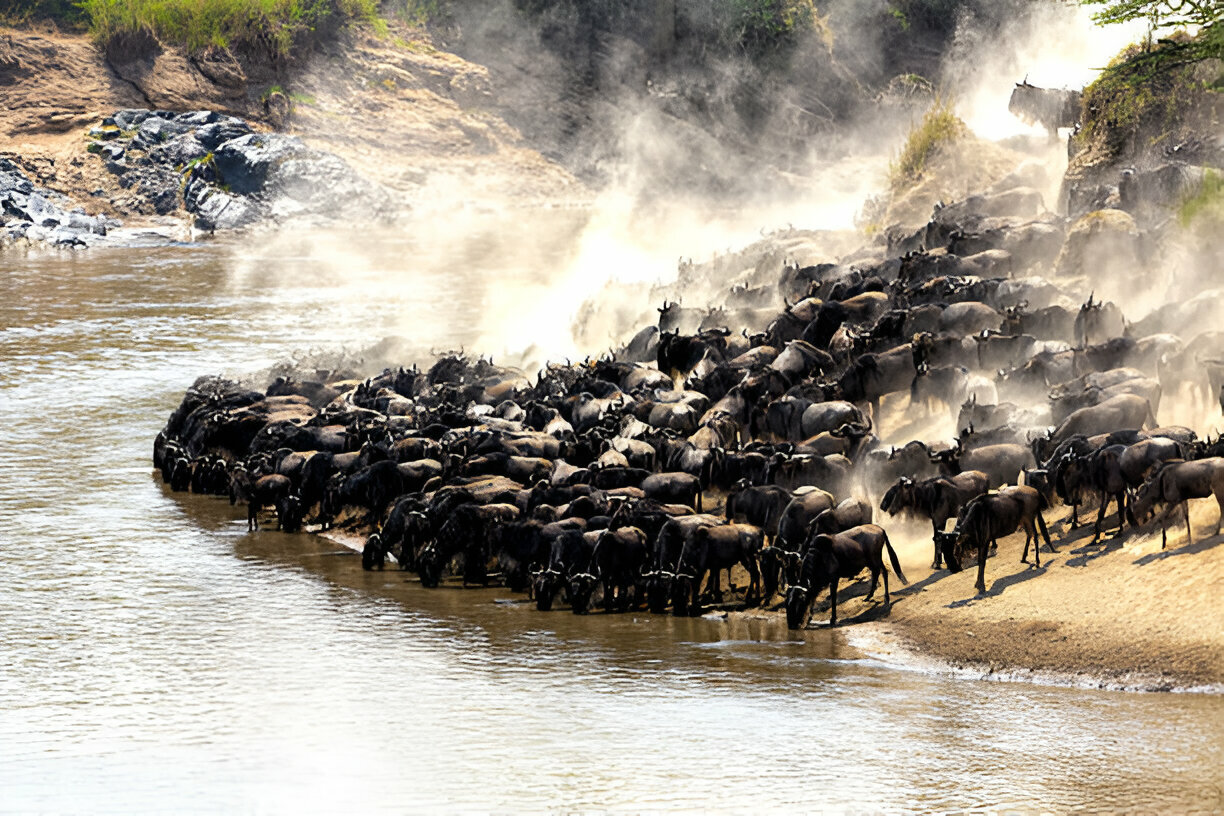
The Great Wildebeest Migration in Kenya is one of Africa’s most spectacular wildlife experiences. Every year, millions of wildebeest, zebras and other grazing animals move through the Serengeti–Maasai Mara ecosystem in search of fresh grass and water.
In Kenya, the migration is mainly associated with July to October, when large herds enter the Maasai Mara National Reserve from Tanzania’s Serengeti. The most dramatic part of the experience is often the famous Mara River crossing.
🦓 July – The Beginning of the Migration in Kenya
July generally marks the beginning of the main migration season in the Maasai Mara.
The first large herds begin arriving from the Serengeti, and early Mara River crossings may occur as the animals move north in search of fresh grazing.
July can be an excellent month for travelers who want to experience the beginning of the migration season, although the exact arrival and crossing dates vary every year.
The Great Migration follows rainfall, grass and water conditions, rather than a fixed calendar.
🐃 August – One of the Best Months for the Great Migration
August is one of the most popular months for a Kenya Great Migration safari.
Large herds are usually present in the Maasai Mara, creating excellent opportunities to see thousands of wildebeest moving across the plains. It is also one of the strongest periods for witnessing the dramatic Mara River crossings.
The crossings can be spectacular, with wildebeest gathering along the riverbanks before suddenly entering the water. However, a river crossing is never guaranteed on a particular day.
For travelers whose main goal is to see the famous river crossings, August is an excellent month to consider.
🦁 September – Excellent for Migration and Predators
September is another outstanding month for the Great Migration in Kenya.
Large herds can still be found throughout the Maasai Mara, while the concentration of prey creates excellent opportunities to see predators such as lions, cheetahs and hyenas.
September can also be attractive to travelers who want peak migration activity while potentially experiencing slightly less pressure than the busiest parts of August.
The migration season generally continues through September, although the exact movement of the herds depends on environmental conditions.
🌿 October – The End of the Main Kenyan Migration Season
By October, some wildebeest herds begin moving south again toward the Serengeti as rainfall and grazing conditions change.
Although the migration may be less concentrated than during August and September, October can still provide excellent wildlife viewing. Visitors may also benefit from fewer crowds compared with the busiest peak periods.
The Maasai Mara remains a fantastic safari destination even when the migration herds are moving away because resident wildlife can be seen throughout the year.
📅 Which Month Is Best for the Great Migration in Kenya?
| Month | What to Expect |
|---|---|
| July | Herds begin arriving; early river crossings are possible |
| August | ⭐ Peak migration activity and excellent crossing opportunities |
| September | ⭐ Excellent migration, predators and possible river crossings |
| October | Herds begin moving south; good wildlife viewing with potentially fewer visitors |
⭐ Best Overall Period: July–October
For a classic Kenya Great Migration safari, July through October is the main period to consider.
⭐ Best Months for Mara River Crossings: August–September
If your primary goal is to witness the spectacular Mara River crossings, August and September are generally among the strongest months.
However, remember that nature does not follow an exact timetable. Herds may gather at the river for hours or days, change direction or cross at another location.
🐊 Are the Mara River Crossings Guaranteed?
No.
This is one of the most important things to understand when planning a Great Migration safari.
Wildebeest do not cross the Mara River according to a predetermined schedule. Their movement depends on rainfall, grazing, water levels, herd behavior and other natural conditions.
This means that even during the peak migration season, you could spend several days in the Maasai Mara without witnessing a river crossing.
Rather than booking a safari solely for a guaranteed crossing, it is better to experience the entire migration ecosystem—the enormous herds, predators, beautiful landscapes and daily movement of wildlife.
🏕️ How Long Should You Spend in the Maasai Mara?
For travelers specifically visiting Kenya to see the Great Migration, spending several days in the Maasai Mara increases the opportunity to encounter moving herds and possibly witness a river crossing.
A 3-day/2-night safari can provide a good introduction, while 4 days or more gives you greater flexibility to explore different areas and follow wildlife movement.
Your choice of accommodation and location is also important. A knowledgeable guide can monitor the movement of the herds and adjust game-drive plans accordingly.
🌍 Experience the Great Migration with Openbill Safaris Uganda
At Openbill Safaris Uganda, we can help you plan a memorable Kenya Great Migration safari to the Maasai Mara.
Whether you are looking for a budget, mid-range or luxury safari, we can customize your itinerary around your travel dates, preferred accommodation and wildlife interests.
We can also combine your Kenya migration experience with other East African destinations for a more complete safari adventure.
Plan your Kenya Great Migration safari with Openbill Safaris Uganda and experience one of Africa’s greatest wildlife spectacles.
📧 Email: openbillsafarisuganda@gmail.com
📱 WhatsApp: +256 745843863
Openbill Safaris Uganda – Changing lives through tourism.